
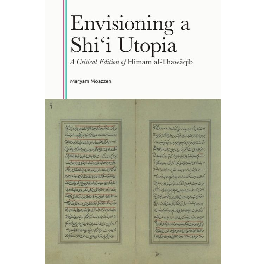
Envisioning a Shi’i Utopia: A Critical Edition of Himam al-Thawaqib
Author: Maryam Moazzen
Year: 2026
ISBN: 9781399565943
Language: English
408p, H2340 x W156 (mm)
Table of Contents
Preface
Part I: Context, Author, and Text
Introduction
1. Life and Works of Alī Naqī Kamarehī
2: Himam al-thawāqib: Structure and Core Themes
3: Annotated translations of the Key Themes in Himam al-thawāqib
Part 2: Critical Edition of Himam al-thawāqib
Bibliography
Appendix
Himam al-thawāqib, the magnum opus of ʿAlī Naqī Kamarehī (d.1650), the Shaykh al-Islam of Isfahan during the reign of Abbas II, offers a distinctive Shiʿi counsel manual that departs from conventional Perso-Islamic advice literature, offering a unique and distinct approach to Shiʿi statecraft. In it, Kamarehī critiques the marginalisation of the Shiʿi ethos under Shah Safī (d. 1642) and envisions a utopian Shiʿi society characterised by a symbiotic relationship between dawlat (state) and dīn (religion), grounded in the ethical and theological teachings of the Shiʿi Imams. Engaging critically with a range of thinkers, he addresses enduring debates on Qurʾānic authority, human freedom and predestination, and Sunni–Shiʿi relations, while reflecting on the complex ties between the ʿulamāʾ and Safavid elites.
This book presents the first critical edition with annotated translation of Himam al-Thawāqib, based on two extant manuscripts. It provides a comprehensive introduction to the life and works of Kamarehī, including a concise overview of the structure and major themes of Himam al-Thawāqib, and situates Kamarehī’s contributions within broader Safavid, Mughal and Ottoman contexts. The book offers fresh insights into Safavid religio-political history and Islamic political thought, as well as highlighting how Kamarehī’s ideas continue to resonate in contemporary Iran, where debates over governance and clerical authority remain central.
Related Titles

Ottoman Poets and Poetics in the Sixteenth Century Introducing Asik Çelebi’s and Latifi’s Biographical Dictionaries
Editor: Kristof D'hulsterYear: 2025ISBN: 9781399537612Language: English416p, H234 x W156 (mm) List of FiguresAcknowledgementsNotes on Conventions Introduction: Reading Ottoman Biographical Dictionaries in Translation Part I. Aşık Çelebi and His Tezkire 1. The Author...

Persianate Prose and the Making of Malay Muslim Literature
Majid Daneshgar

Shiʿite Legal Theory: Sources and Commentaries
Kumail Rajani & Robert Gleave (editors)

A Short History of the Gibb Memorial Trust and its Trustees: A Century of Oriental Scholarship
Charles Melville (editor)
Faḍāʾil-i Balkh
Arezou Azad(Author); Edmund Herzig(Author); Ali Mir-Ansari(Editor)
The Portrait of Abū l-Qāsim al-Baghdādī al-Tamīmī
Emily Selove (Editor), Geert Jan van Gelder (Editor)